
Scarlet Pro™ and EXO|E® for Hypertrophic Scars

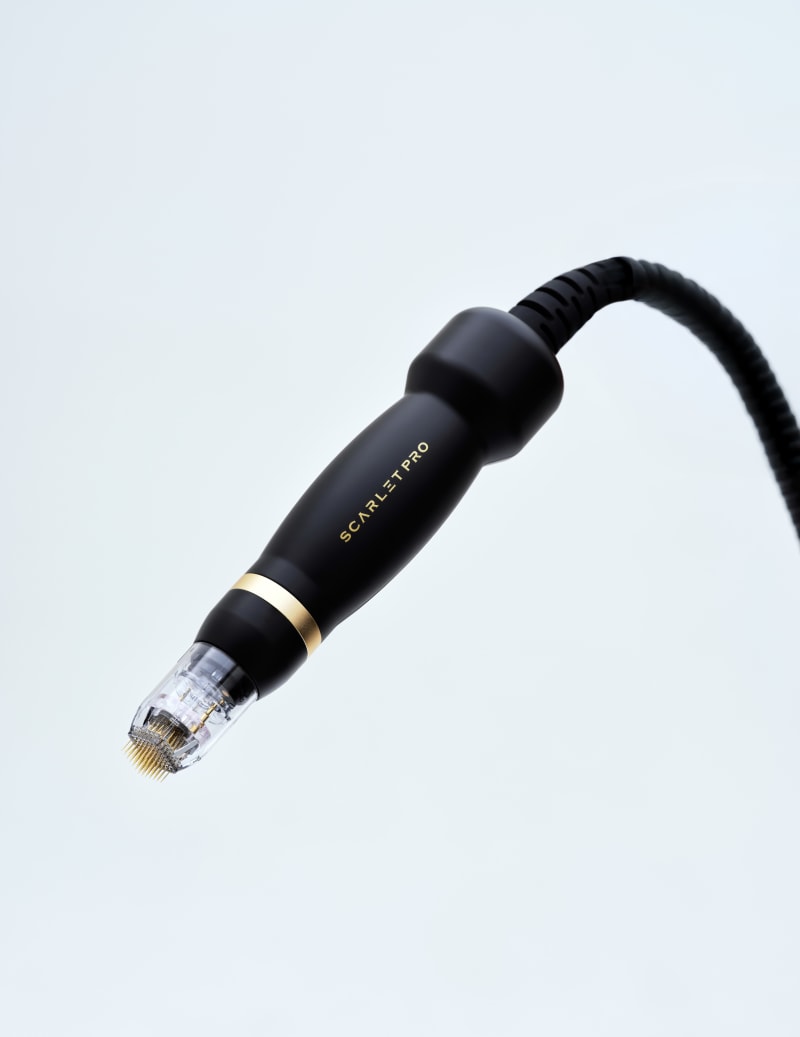
Raised, stubborn scars are among the harder concerns practices see. The July/August 2026 issue of The Aesthetic Guide included a feature by Contributing Editor Lisette Hilton, "Hypertrophic Scar Management with RF and Plant-Derived Extracellular Vesicles," on how one clinician combines Scarlet Pro™, a radiofrequency (RF) microneedling system that Aesthetic Management Partners (AMP) launched in the U.S. with Viol, with EXO|E®, a plant-derived extracellular vesicle formulation from AMP's biotherapy line.
How Hypertrophic Scars Form
The article explains that hypertrophic scars, unlike atrophic scars, come from an exaggerated healing response rather than collagen loss. The process involves persistent inflammation, excess fibroblast activity, abnormal collagen deposition, and disorganized remodeling of the extracellular matrix. Melissa Gibbens, MSN, APRN, AGNP-C, owner of Melissa Gibbens Aesthetics and Wellness in Houston, Texas, says treatment is about more than flattening a scar:
"Successful treatment requires more than reducing scar thickness — it requires restoring healthier tissue architecture," said Melissa Gibbens.
RF Microneedling and EXO|E® in Practice
Gibbens works with fractional bipolar RF microneedling, which the article says targets the biological processes behind fibrosis. On Scarlet Pro™'s design, she said:
"Scarlet Pro combines an ultra-short pulse duration, adjustable treatment depths and multiple treatment modes to deliver precise thermal coagulation while minimizing unnecessary thermal diffusion into surrounding tissue," Ms. Gibbens explained.
According to Gibbens, treatment plans are individualized based on the scar's age, severity, thickness, location, and the patient's healing response, and most patients undergo a series of three to six treatments spaced four to eight weeks apart.
EXO|E® is a key addition to her protocol. She applies it immediately after each treatment depth and leaves it on the skin for about one minute before removing excess product and moving to the next programmed depth, rather than only after the full treatment. On the rationale, she said:
"While human clinical evidence continues to evolve, preclinical research suggests these vesicles may help modulate inflammation, reduce oxidative stress, promote angiogenesis and support more organized extracellular matrix remodeling — biologic effects that are highly relevant for hypertrophic scar treatment," according to Ms. Gibbens.
She further adds that, along with progressive flattening, patients often describe their tissue as softer, smoother, less tight, and more flexible, which she links to better tissue quality rather than scar height alone. “These functional improvements are often as meaningful as the cosmetic changes, particularly for patients with longstanding hypertrophic scars,” shared Ms. Gibbens.
The article describes the biologic rationale as not yet a clinically proven strategy, and published research on RF microneedling for hypertrophic scars is still developing, including a case report in the Journal of Clinical and Aesthetic Dermatology. Gibbens shares her own clinical experience; individual results vary, and treatment decisions should be individualized by a qualified healthcare professional based on each patient's health, anatomy, and goals.
Bring Scarlet Pro™ and EXO|E® to Your Practice
To learn how Scarlet Pro™ and EXO|E® could fit your scar treatment offerings, contact AMP or explore the clinical education and practice support that AMP provides to practices.