Dr. Helton Shares More on NOUVADerm™ Hidden Benefits

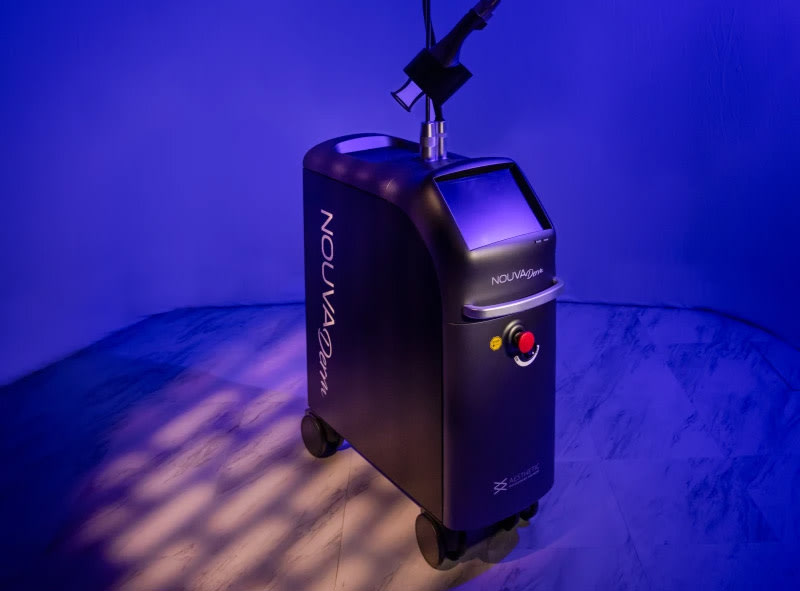
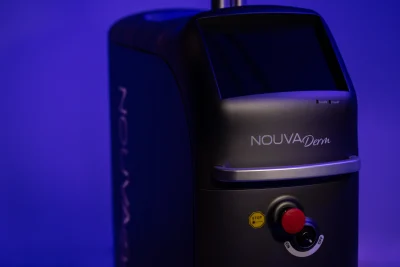
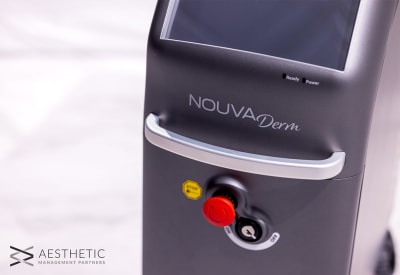
In the video below, Dr. Peter Helton, board-certified dermatologist, talks about the hidden benefits of the NOUVADerm™ laser and how it continues to impress him on a daily basis.
Dr. Helton: “Why we love Thulium? Well, why I love Thulium is because of pigment correction, sun damage treatment, melasma support, and the glass skin that everybody's looking for. But what is actually happening underneath the skin that gives us these results?
Recently, in ‘Lasers in Surgery and Medicine,’ there was an article, clinical report, ‘The clinical and histopathological assessment of the field of cancerization in human skin before and after treatment with a 1927 nanometer thulium fractional laser.’ This is the exact same laser that's being sold today under the name NOUVADerm™.
So what's up? Field of cancerization is kind of an overwhelming term.
Essentially what it means is it's a concept in skin oncology where if you have sun damage on your skin, you've had UV radiation penetrating that dermis, and when that UV radiation penetrates that dermis, it causes abnormal DNA synthesis.
So you have a whole field of actinic damage. We just happen to notice where the skin cancer is, or we happen to notice where the actinic keratosis is. But the field of cancerization is essentially the whole area that was contaminated by UV light. Think of it as a crack in the cement.
So if I see that obvious crack in the middle, that's our skin cancer or an actinic keratosis. But if you look at all those little cracks around there, what that is, is actinic keratosis that are going to come to the future, or they're areas of atypical cell growth that may cause a problem later on. So the entire field has been injured. So chronic UV exposure basically creates an entire area of skin where you have cancerous changes.
It causes DNA damage, oxidative stress, which leads to chronic inflammation, and then the keratinocytes get confused, and they don't combine the way they should, and they can become genetically altered, creating an actinic keratosis that results in a squamous cell carcinoma, which is what we don't want.
So normal skin isn't always normal. So what we see in our clinic population is we can see visible actinic keratosis, we can see rough spots that bother people. We can see scale, and we can see red lesions. But what we don't see, because we don't have microscopic eyes, is we don't see the keratinocyte atypia. We don't see DNA mutations. We don't see solar elastosis or the subclinical actinic keratosis and the chronic inflammation that occurs.
35% of biopsies from normal-appearing skin already meet criteria for histological actinic keratosis. So we have all sorts of skin cancers that are brewing in our skin if we have significantly photodamaged skin. So the skin may look normal, but it's actually harboring some ominous changes. The trend in dermatology is to spot treat. So we treat the areas that we see.
We treat the pre-cancers we see. We treat the cancers that we see. And a lot of that is dictated by the insurances paying what they pay for. They don't necessarily pay for prevention. But if you treat the entire field, now you're treating as well as prevention. So you're addressing the entire biologically altered field, not only taking care of the actinic keratosis they have, but the future ones that they're going to get. So that's the current trend that we would like to go towards to actually help our patients.
So let's talk about the study itself. There were 23 patients. The mean age was 61 years. 70% of them were female. They were different Fitzpatrick types of Type I, Type II, and Type III. So we had some darker-skinned people in there. They all had significant photo damage, significant enough that they had at least three actinic keratosis on each side of their face. And so we picked a population that had some decent sun damage.
So if you look on the slide on the left, that philodes-type structure is an actinic keratosis. You don't have to be a pathologist to notice that there's a significant difference between left and right. The pathology from the right almost looks like it's from someone who's 10 years younger. Look at how the stratum corneum, the very top layer of skin, has a basket weave pattern to it. That seals the water in and gives us that glass skin-type appearance. And what we see is fewer atypical cells.
So that's a great result. So they graded these actinic keratosis from Grade 1 through Grade 3, just to quickly go over it.
Grade 1 was confined to the lower third of the epidermis. And Grade 2 and Grade 3 involved more than two-thirds of the epidermis. So we're talking full thickness epidermis. Now, once the atypical keratinocytes start to penetrate into the dermis, that's when we start calling them squamous cells.
So that's why it's important. You have a whole bunch of bad guys there. The more bad guys you have, the more likely it is that they're going to dive deep.
So what happened with the study? What basically happened is we noticed how the actinic keratosis shifted in their statuses. They went from deeper to more superficial, which is what you'd expect, because as the skin ages, the lower epidermal cells will eventually work their way to the top and fall off. But if they're abnormal, they tend to stick around and cause more abnormality. So we were able to help the body shed these atypical cells by pushing the more severe cells more superficial.
Next, we found is we increased fibroplasia by 58%. Now, this one goes great in my cosmetic world because we're actually able to stimulate and create more fibroblasts, whose job is to create collagen fibers. We create more collagen fibers. Then what happens is we have a thicker dermis, we have a thicker epidermis, and the body works better, and it drives new collagen production, which gives you an external result of less wrinkles and a thickening of the skin. We also notice an increase in dermal thickness. So again, look at the before and after on this patient.
We would all rather have the after effect on that on a histological slide. And this is actually pathology from the study itself.
And it had an increase of 0.194 to 2.44. So that's a pretty significant decrease in the dermis in somebody that's only had four treatments.
To summarize, untreated skin has evidence of pigmentation. It has a thinning of the epidermis and a loss of dermis. Whereas the Thulium treatment zone ended up being healthier skin because of the dermal remodeling and the more functional epidermis that was created.
So what does this mean? The laser actually changed the biology of the skin. It didn't erase the atypia, but what it did is it shoved it further to the top so that it could be more easily removed, most probably from further treatments.
So if you look at before treatment, it's like having a forest fire that's starting at the bottom and burning all the trees. Now, after the Thulium laser, we've kind of put out all the fire at the bottom, and it's just a little bit left at the top. So the atypia didn't disappear, but it improved significantly. So looking at the actual results from the study, this is a patient, and from a photo damage result, he's significantly better. We don't see as many blotches on him. We don't see as many preclinical actinic keratosis. His skin looks glassy afterwards. There's much less erythema. There's much less inflammation, which is typically what we see with our cosmetic patients. So what do you get out of this? You get a decrease in abnormal pigmentation. You get a decrease in redness.
They notice the decrease in fine lines, an improvement in the patient's perceived texture, and a decrease in sallowness. So the sallowness is kind of the light reflection on the skin. But as you have a greater light reflection, you have a greater tendency towards that glass skin because your epidermis is functioning in its sealed basket weave fashion, holding the water in. So that makes your skin look less wrinkled and reflect better.
Take a look at this gentleman. He had a significant decrease in his lentigines, significant decrease in his actinic keratosis, and he even got some wrinkle improvement out of it. So very impressive for four treatments on this patient group. So the hidden benefit of the NOUVADerm™ laser, we treat what you see and we treat what you don't see. We can take care of surface damage and visible problems, but we're also repairing the foundation and creating a stronger structure. Real improvement that goes deeper than the surface.
Why does this matter?
We get the cosmetic benefit that we already knew about, increased pigment, texture, and tone. We have a structural benefit where our collagen is increasing in thickness and elasticity. We have a biological benefit in that we reduced atypia and we're doing field repair of photo-aged skin. We have healthier skin and the cellular health actually improves. So the take home message is the skin just doesn't look better. Clinical improvement is only part of the story. It actually becomes biologically healthier.”