Dr. Adams on How Plasma Technology Is Changing Skin Resurfacing

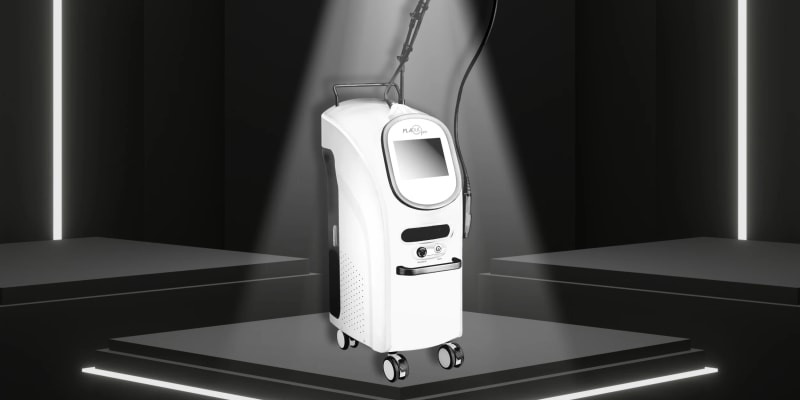
In the video below, Dr. Stewart Adams, MD, FRCP, FAAD, draws on nearly 30 years of experience with energy-based devices to explain how plasma technology is changing skin resurfacing.
Dr. Adams: “At the inception, there were things like CO2 laser, and then things like erbium laser, then later plasma came. Plasma is the fourth state of matter. It is energy delivered through excitation of electrons. I put energy into matter, which is used in nitrogen gas. Plasma sort of caught my eye because it was unique.
The problem with CO2 and erbium was that they were catabolic; they weren't anabolic.
So with plasma skin resurfacing, the energy that's delivered with plasma energy produces collagen, and it reorganizes the collagen bundle in a fashion such that the collagen is naturally oriented in the skin.
As a result, you have collagen and elastin production that is anabolic, that is naturally produced as opposed to scarification, depending on your level and depth.
Plasma also produces a very predictable level of skin injury, and it's a very controlled injury. As a result, you have healing, you have neocollagen and elastogenesis over the period of the next two to three months. So patients in the forty, forty-five, fifty, sixty, depending on the amount of sun damage, we were able to dial the plasma energy up, and we were able to get fairly predictable results with the more coarse lines, periorbital, periocular sort of tightening, and patients were very happy with significant tightening, both linear tightening and improvement in lines.
Post-procedure care is very easy. The body forms its own sort of membrane or what we call crème brûlée over the skin, and then it sloughs off spontaneously. So you don't have to do anything special.
With PLADUOpro, you can treat the bacteria first with argon and then treat with the nitrogen gas. I think pre-treating with argon has certain advantages with pores and inflammation and wound healing, which we'd probably end up using the dual system more often than not.
So you need to identify your patient population.
You've got your patients with rosacea, inflammation, acne with argon, and then your patient population with nitrogen, in which you can treat inflammatory conditions like acne and rosacea, but more importantly, your linings and photo damage. It creates elastin, and it produces a very normal wound healing pattern, which is a little bit different than what you would look at with other modalities such as erbium lasers and CO2 lasers. So it's a way of building as opposed to removing tissue. So you're not getting the atrophy from repeated treatments of other tissues. You're actually building with this technology.”